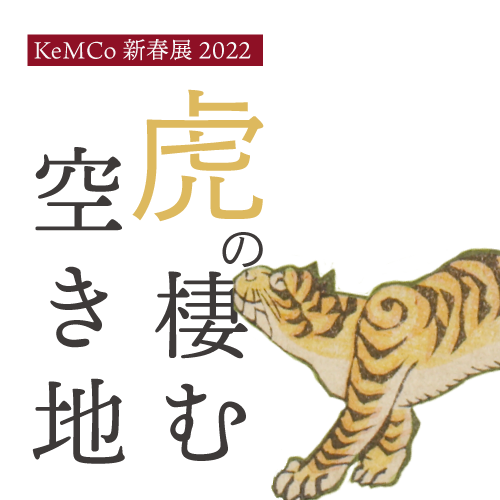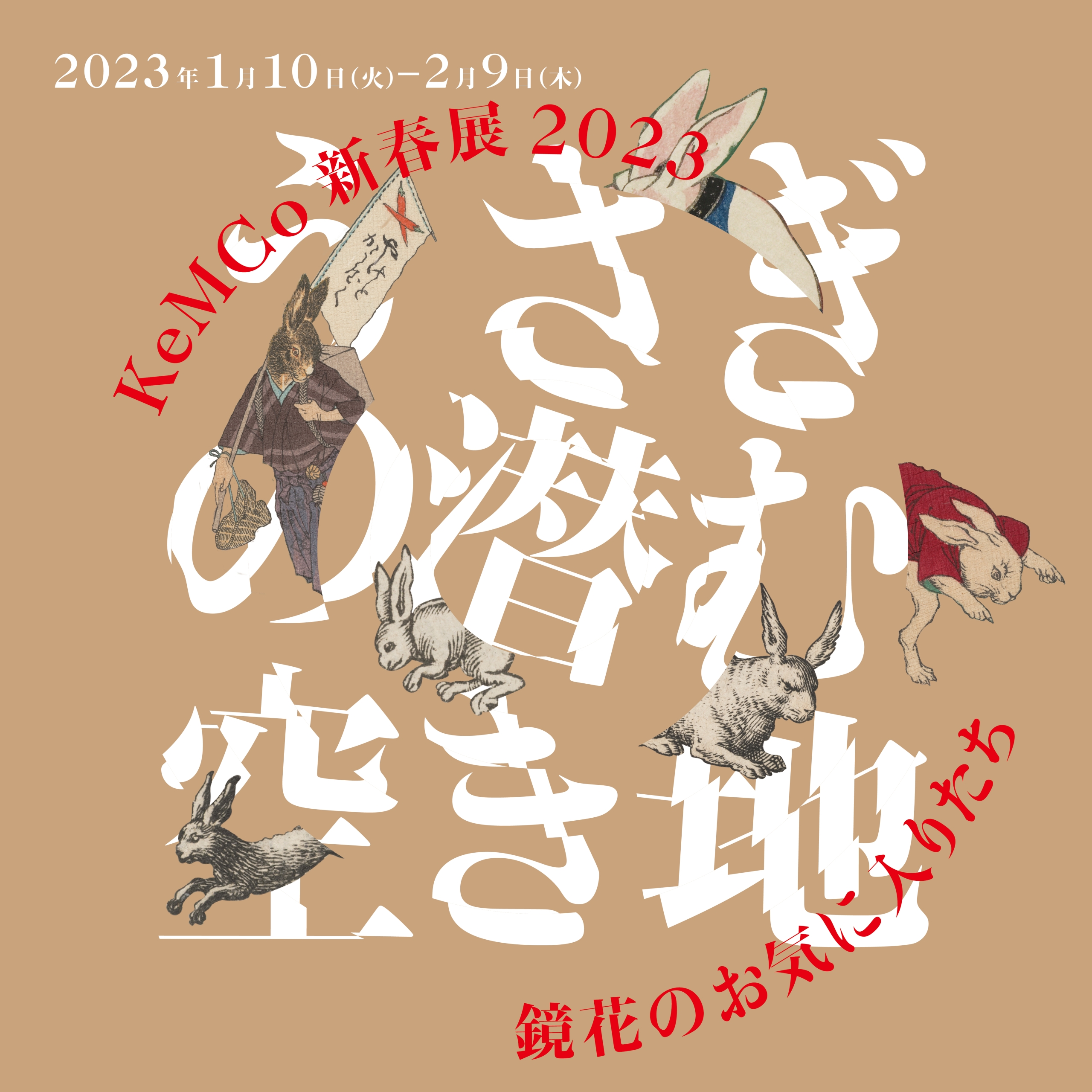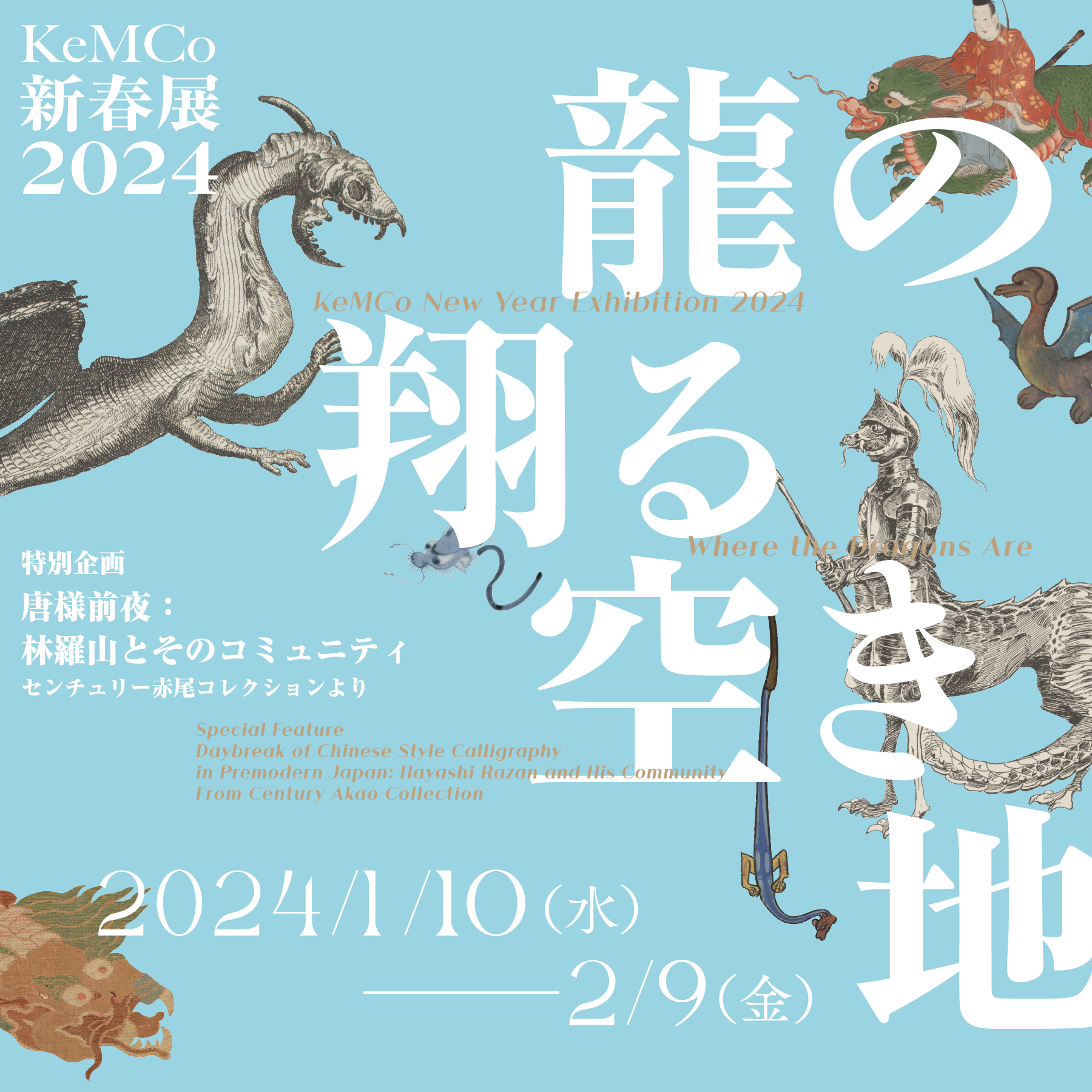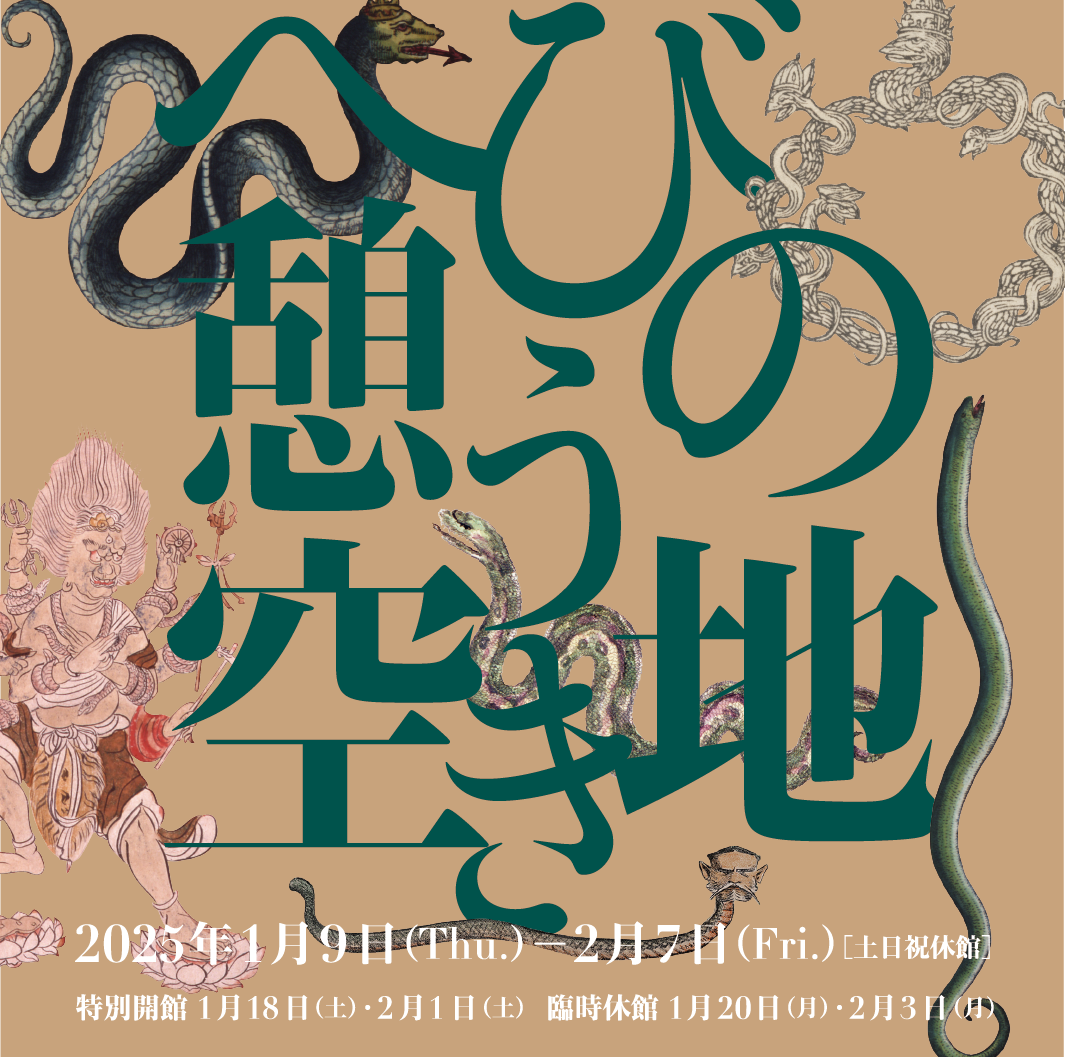




KeMCo New Year Exhibition 2026
Where the Horses Are
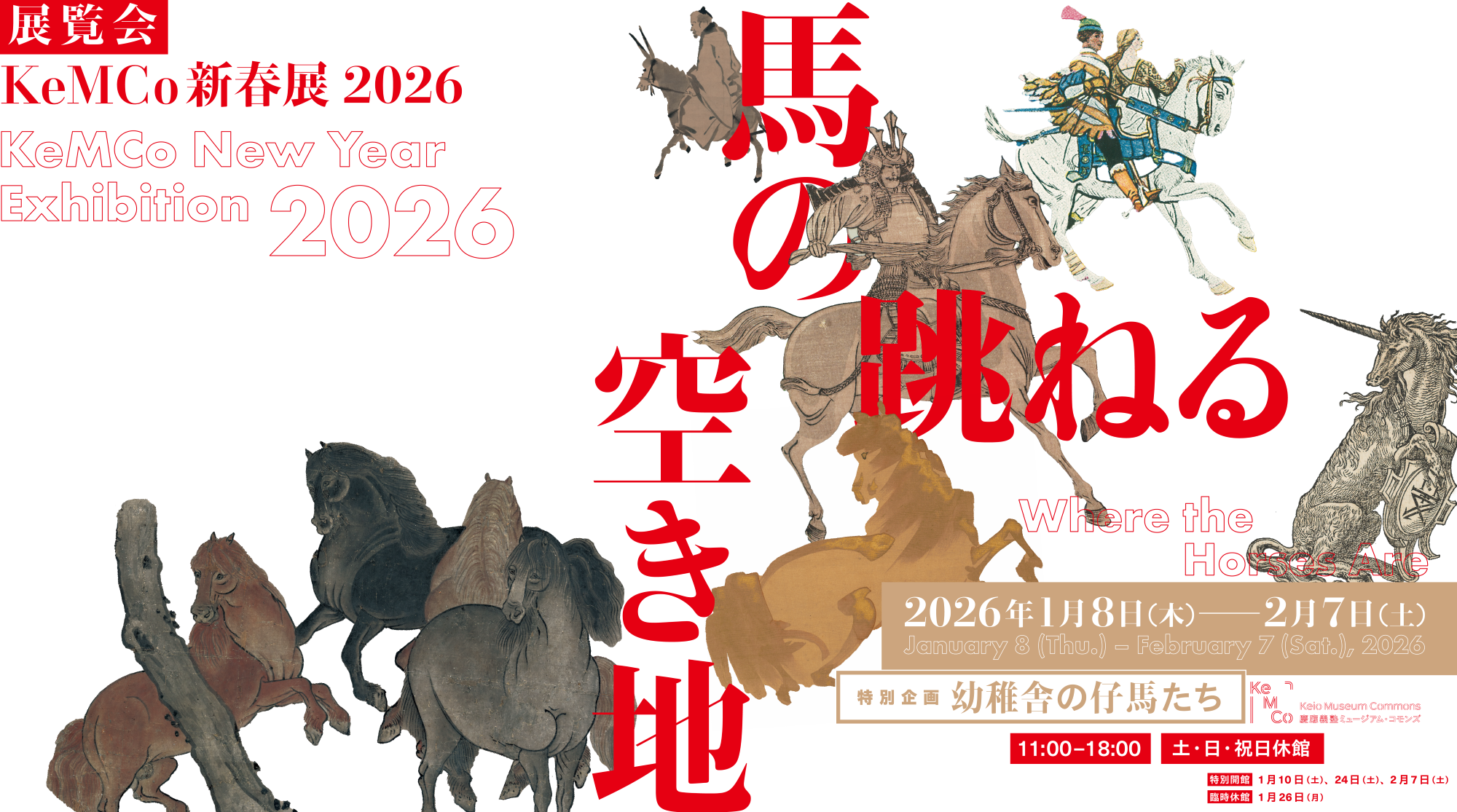
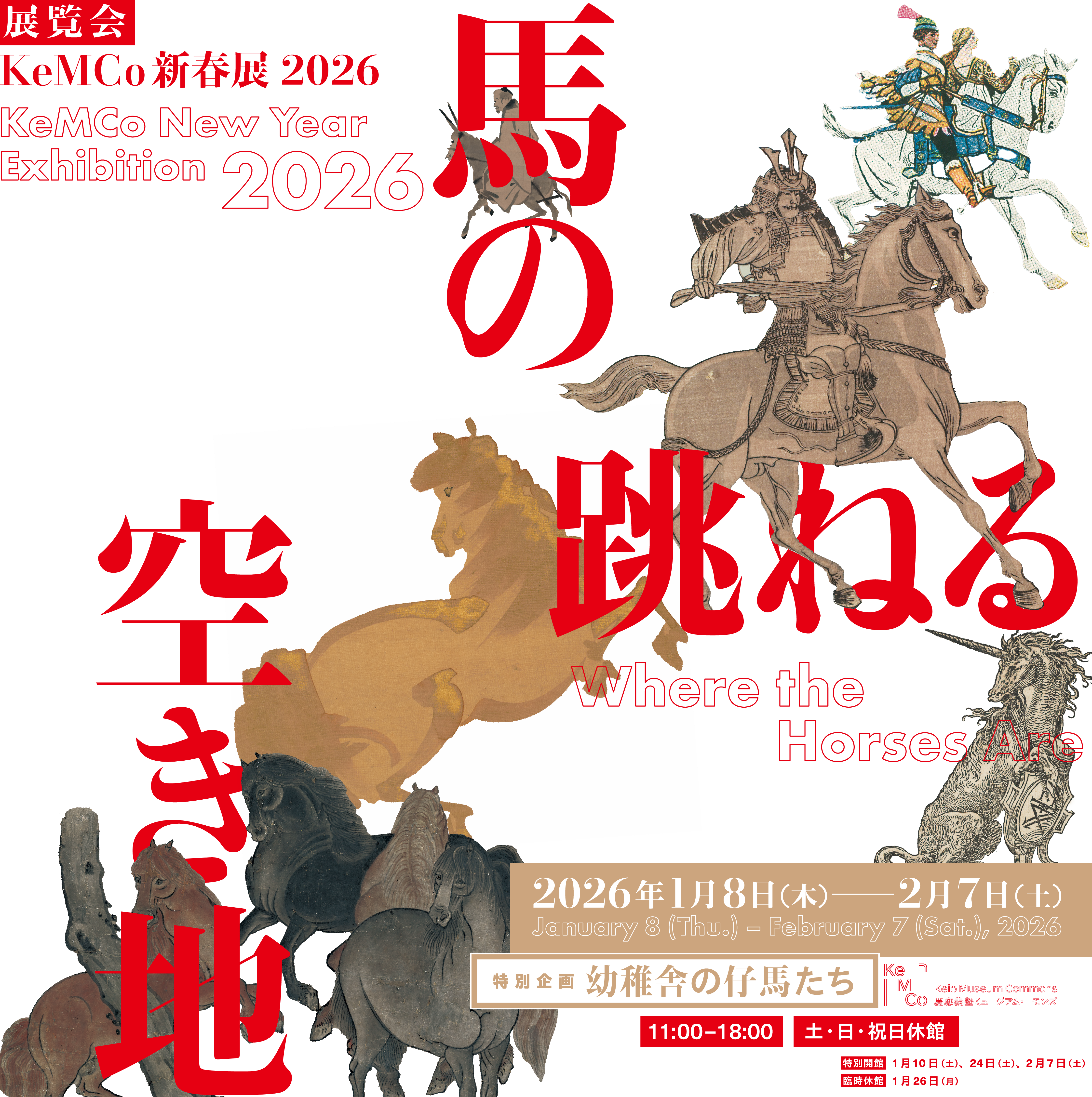
The Chinese zodiac sign for 2026 is the horse. Throughout history, horses, valued for their strength and beauty, have aided the development of human civilization in countless ways— facilitating travel, transport, hunting, farming, and even entertainment. To celebrate the new year, this exhibition will showcase a wide range of works involving horses from Keio’s collections, including rare books, picture scrolls, ukiyo-e prints, and haniwa figures. KeMCo invites visitors to learn about the longstanding relationship between people and horses and renew their appreciation for these incredible animals .
In addition to the main exhibit, a special corner will be dedicated to original cover artwork for Ko’uma, a magazine published at Keio Yochisha Elementary School that is created by artists connected to Keio.
Date
January 8 (Thu.) – February 7 (Sat.), 2026 11:00 – 18:00
*Closed on weekends and public holidays
Weekend openings: January 10 (Sat.), 24 (Sat.), February 7 (Sat.)
Weekday closures: January 26 (Mon.)
Venue
Keio Museum Commons (Mita Campus East Annex)
Audience
Open to the public
Cost
There is no ticket fee or need to book visits in advance.
Enquiries and
bookings
Related Event
Gallery Talk
The talk will be conducted in Japanese with no interpretation available. (Admission is free, but advance reservation is required. The reservation window will close when registrations reach capacity.)
Date: January 10 (Sat.), 2026 Registration Closed.
Time: 14:00–14:40
Capacity: around 25 participants
Main Exhibits (partial diagram)
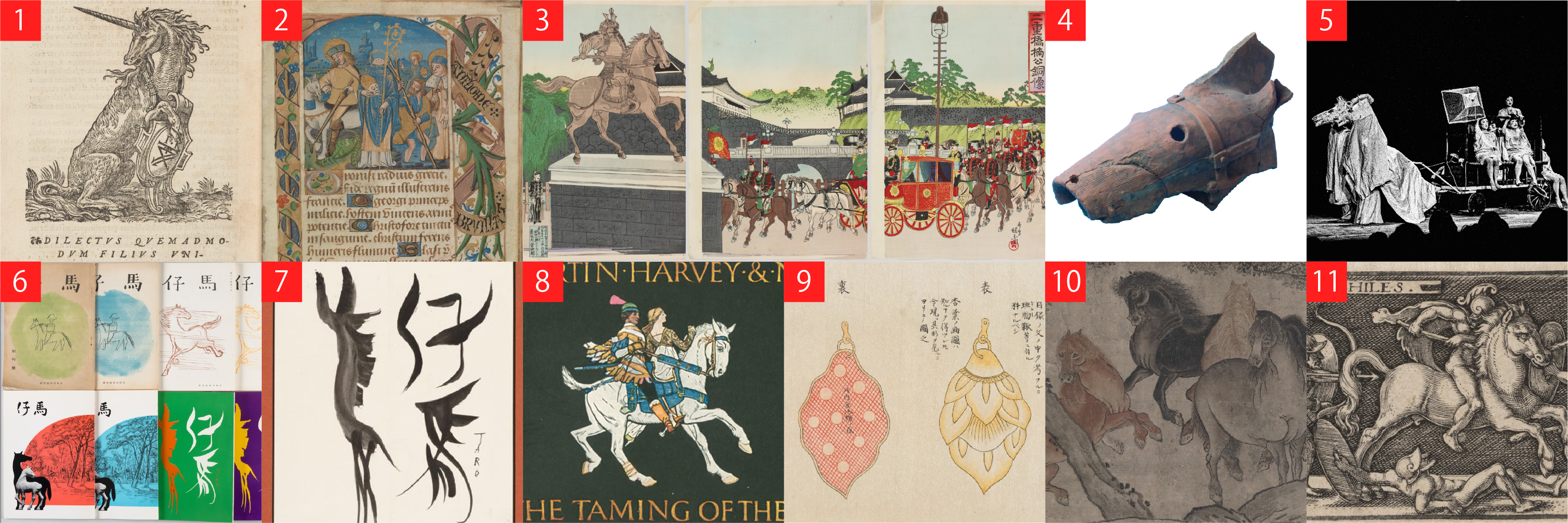
| 1. | Polygraphie, by Johannes Trithemius, 1561, Keio University Library |
| 2. | Book of Hours (in Latin), c.1480, Western Medieval Manuscripts Collection, Keio University Library |
| 3.
| Nijūbashi Bronze Statue, Nankō, illustrated by YŌSAI Nobukazu, 1899, George S.Bonn Collection of Meiji-period ukiyo-e, Keio University Library |
| 4.
| Horse (Haniwa tomb sculpture), late Kofun period, Department of Archaeology and Ethnology, Keio University Faculty of Letters |
| 5.
| Stage photograph from Gibasan (Twenty-Seven Nights for the Four Seasons), photographed by Makoto Onozuka, private collection |
| 6. | Ko’uma, Keio Yochisha Elementary School, photographed by Katsura Muramatsu, Calo works Co.Ltd.) |
| 7. | Ko’uma, by Tarō Okamoto, 1965, Keio Yochisha Elementary School |
| 8.
| The Taming of the Shrew, featuring Martin Harvey and N. de Silva, Prince of Wales Theatre, Kaoru Osanai’s Theater Picture-Postcard Collection, Keio University Library |
| 9. | Kumano Shingū Sacred Treasure Drawing, compiled by UJITA Tadasato, 1794, Century Akao Collection, Keio University |
| 10.
| Gunbazu (Horses), painted by UNKEI Eii, Muromachi period, Tokiwayama Bunko Foundation (in the care of Keio University) |
| 11. | Achilles and Hector, by Hans Sebald Beham, c.1518–1530, Keio University |
Click hear  for a list of exhibited works
| Organized by: |
| Keio Museum Commons |
| With cooperation from: |
| Keio University Art Center |
| Center for Kampo Medicine, Keio University School of Medicine |
| Shinanomachi Media Center (Keio University Library) |
| Hiyoshi Media Center (Keio University Library) |
| Historical Documents Room, Keio University Faculty of Letters (Komonjoshitsu) |
| Department of Aesthetics and Science of Arts, Keio University Faculty of Letters |
| Department of Archaeology and Ethnology, Keio University Faculty of Letters |
| Keio Institute of Oriental Classics (Shido Bunko) |
| Mita Media Center (Keio University Library) | |
| Fukuzawa Memorial Center for Modern Japanese Studies, Keio University | |
| Keio Yochisha Elementary School | |
| Tokiwayama Bunko Foundation | |
| (Update December 9, 2025.) |
You may also like