


The guidance video for the 2026 Spring course is now available: https://youtu.be/gJdw4LYYapA
This practice-based module explores the complexity and richness of making processes through hands-on engagement with contemporary technologies, including programming and digital fabrication. By moving back and forth between tangible and intangible forms, students are encouraged to reconsider the significance of process in a society increasingly dominated by mass-produced and finished objects.
Objects—particularly cultural artefacts held by museums—are layered entities shaped by the technologies, social conditions, and value systems of the periods in which they were created, used, and transmitted. The processes through which objects are made often involve diverse, unstable, and contingent choices that remain invisible when attention is focused solely on the finished form. These processes embody the richness and potential of human intellectual and creative activity.
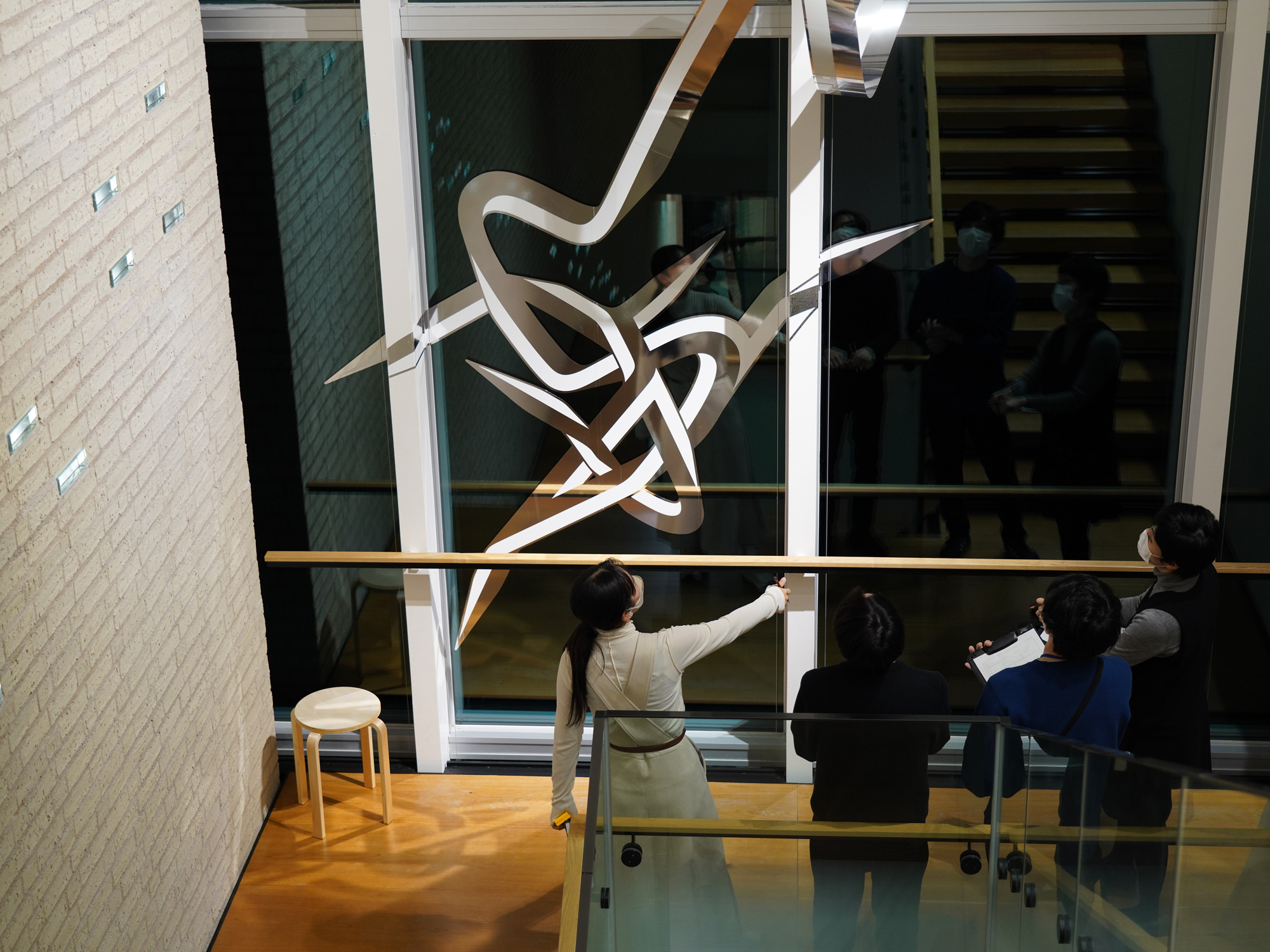
Drawing on exhibitions at Keio Museum Commons (KeMCo) and cultural collections held by Keio University, this module invites students to explore such processual complexity through making. Through object-based learning, fieldwork, and collaborative production, students will develop both critical perspectives on museum objects and practical skills in creative and technological experimentation.
No prior experience in programming or making is required. All technical skills are introduced from an introductory level, making the module accessible to beginners.
[Keywords]
#DigitalFabrication; #Making; #Programming; #Museums; #ObjectBasedLearning; #ContemporaryArt; #Design
This lecture is held face-to-face. If there are too many applicants, there will be a lottery.
More information on the course is also available in the guidance video.
Guidance video: https://youtu.be/gJdw4LYYapA
Museum and Commons I (2026 Spring)
| No.1 | Introduction and Object-based Learning (OBL) I Overview of the module, key themes, and learning methods. Introduction to object-based learning, with practical exercises using objects from the Keio Museum Commons (KeMCo) collection. |
| No.2 | Object-based Learning (OBL) II Further OBL practice and discussion of OBL as a methodology, focusing on the perspectives and insights it enables. |
| No.3 | Media Art and Technology I: The Work of Soichiro Mihara Case study of the exhibition <i>Recipe: The Art of Air</i>, exploring media art practices and process-based approaches. |
| No.4 | Media Art and Technology II: Discussion Introductory lecture and exercises covering the fundamentals of programming. |
| No.5 | Introduction to Making I: Programming Basics Introductory lecture and exercises covering the fundamentals of programming. |
| No.6 | Making Workshop II: micro:bit Input and Output Introduction to the educational microcontroller micro:bit, focusing on inputs (buttons, accelerometers) and outputs (LEDs, speakers). |
| No.7 | Making Workshop III: Programming Applications and Digital Fabrication Connecting micro:bit with personal computers and introducing digital fabrication techniques, including laser cutting. |
| No.8 | Developing Making Ideas: Fieldwork at the KeMCo “Gulliver’s Travels” Exhibition Fieldwork at the KeMCo exhibition Gulliver’s Travels, using the exhibition as a site for generating ideas for making. |
| No.9-12 | Making Practice: Implementing Ideas Group-based implementation of proposed ideas. |
| No.13 | Testing in Practice: Using the Made Objects in an Exhibition Context Testing the produced works in an exhibition setting and identifying areas for improvement. |
| No.14 | Final Presentation |
Yu Homma, Yohko Watanabe, Shiho Hasegawa, Kazuhiro Shinoda
※ This course is organized as part of the University’s educational programme, and is therefore only open to those affiliated with the University.
